To Uncle Frank, from the End of Winter
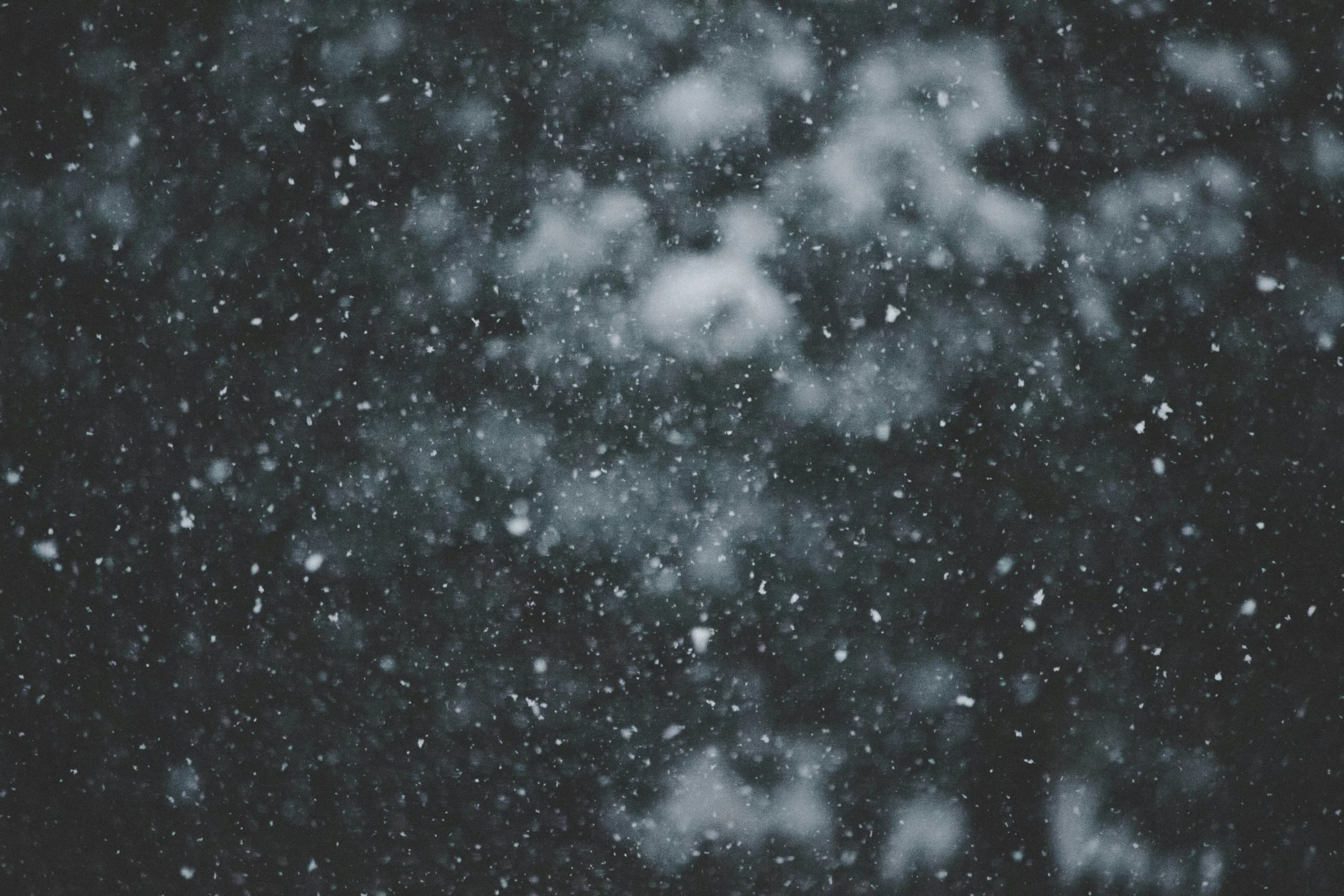
It’s been a long winter, as they often are, Uncle Frank. I think of the New England cold often, so particular, almost personal in how stark and enduring it was. I felt as though that sky, if given the permission to, would stay frozen forever.
You might have recognized it in me: how ill-equipped I was to handle the cold, or to be within a body—my own, the student one, that of Christ even. This cold, in contrast with the overbearing heat of the Nairobi I knew and secretly loved, was unforgiving. But not only was I cold; I was also lost. It was my first time in America and I was nearly eighteen and only just coming into ideas of my own personhood. Like for many people, the architecture of Yale’s campus buildings were a point of wonder for me. I particularly loved walking up Science Hill, going all the way past Sterling Chemistry Lab with its terracotta-coloured neo-gothic facade, up the tree-lined road to the serenity of the Yale Divinity School, which was particularly stunning in the fall, the white spire of the chapel stark against the sky. It was difficult to tell whether these and other fascinations were because I was simply in a new place for the first time, or because, held up against those of fellow students, who seemed shinier, more aloof and sophisticated, they became tied up with my identity as an outsider.
“Your presence made the cold easier, even if I never learnt how to answer to the cold and all it dragged along.”
Then, one night at Calhoun College—now named Grace Hopper College as a way of eliminating the remnants of slavery’s endorsements on campus—you and I met for the first time. In this blur of white and time, of white time, of white, rich privileged time, you were there, Uncle Frank: tall, with sharp, wide eyes that held an unwavering gaze, taking purposeful strides across the dining hall you worked at. “I’m Uncle Frank, you let me know if you need anything,” you said to me and my African friends, still steaming from the backroom of that dining hall where you worked, apron on, eyes clinical in how they sought us out. I have never forgotten you. Your interception of this winter unmooring, swift in how you identified it, was near dramatic in its glory. You held a bowl of grapes aloft, pairs of eyes trained on you, including mine and those of my Black African friends—a minor spectacle of where you might be going with them. They weren’t serving grapes for that meal, and lucky would be the ones who got them, fat and purple and round. You put the bowl between us and walked back to the kitchen, your statement made before we’d done the reading and conducted the interrogations and engaged in the discourse that said the same thing: We were worthy. Whether in Calhoun, whether in the snow, whether we knew it or not, you made it known to us.
Your presence made the cold easier, even if I never learnt how to answer to the cold and all it dragged along. I find myself, many years later, trying to describe the feeling of being in my room late at night, watching the snow fall, its too-white brightness counterintuitively softening the lay of the courtyard outside, illuminated around the singular lamp there. There were no words for the deeply alienating sense of being a foreigner, except in saying it felt like watching the snow fall alone. Without anyone else to watch it with, it felt like being lost in a strange dream, adrift in an unfamiliar landscape that was sheathed in a cold whiteness I hadn’t experienced before.
There was something you knew, Uncle Frank, about Blackness. It was something I hadn’t yet come to understand, especially becoming aware of the distinctions between my own Blackness and its myriad other forms that existed in America: There were Black people who’d immigrated from the Caribbean; from Africa; those whose families had been in the USA for several generations; and those for whom these designations might prove difficult to untangle, their heritage rooted in varied ethnicities. These differences, however, seemed to matter little to you, even if, for many Africans, they were stark. There were various schisms that existed throughout these Blacknesses, unbidden or not, meaningful or not; these were not always discrete events, but a prevailing sociological condition, which, at their worst, ended up as the infamous diaspora wars. On Twitter, the term was used to describe disagreements amongst members of the Black diaspora. It was rooted in accusations around appropriation, about who was allowed to do what based on where they were from, and most insidious of them all, who the term ‘Black’ really belonged to. For Africans at Yale, it came up in the moments when the smog of American exceptionalism loomed over certain issues we experienced that might have been addressed as a matter of Black solidarity—accommodation for international students who couldn’t afford it over the winter break, for example, or solidarity with the victims of a terrorist attack on a college in Garissa, Kenya—but were rather relegated to the realm of distinctly African concerns, and thus, of a lower priority in the face of more urgent, more present realities for Black folk in America, despite the knowledge that they were all interconnected, one way or another.
As we ate, we made sure to to remain at some level of invisibility, to layer against one another and fold into the protection of our commonwealth. In the dining halls, we made this known by how we’d claim long tables, a rotating cast of African students swapping places over lunch in between classes. I saw how the deep textures of culture and personality refused to melt under the need to conform. I saw it in the tall, brash political science student from South Africa and his hefty declarations on the state of the continent. I saw it in the trio of Ghanaians in the year below mine: one who ran a fashion blog on Facebook, another who sang in gentle, gossamer tones, and the last, with her open face and lovely smile, whose animated way of speaking made her impossible to ignore. I saw it in the soft-spoken student from Senegal who studied art, whose mind was a riot against conformities and what was expected of her gender, her class, her race.
Then you were there, obliterating the shield that insulated us by the simple fact of your attention. There was something you knew about being Black and in America that we had come to take for granted, even as it was implied whenever there was any gathering of Black folk on campus: that there was no need to draw unbidden lines around differences in the Black experience, considering they emanated from the same core. Yet, in some cases, Africans became the enemy in the diaspora wars that emerged when this fact was forgotten, fuelled by the deliberately constructed discontinuities in the knowledge of our shared history, fired on by the notion that perhaps we were taking up room where there was limited space. Because of this, I thought to myself to let America belong to the Americans, but you showed me I was wrong. That I was there, too. So did the staff member at Trumbull College dining hall, who watched me come in dripping from the rain, my afro a soggy mess. She was a Black woman, her kind eyes set with concern, and was by my side with a hat in no time. There was the Black security guard who stood right outside my college dorm on Elm Street, arms stuffed in his pockets, who would always nod and say hello as I came from my hours’ long lab sessions on the other side of campus, frozen into the early nights and bitter wind coming down Science Hill. There was Aarica, a student who met me in the Saybrook College dining hall, who liked my pants and took me to the off-campus sanctum that Black female students had created—warm if messy apartments filled with cozy textiles and home-cooked meals, some sent over by the students’ mothers and sisters. There was the boy I had a crush on, whose mixed heritage was traced through Caribbean history, with whom I had conversations on pop culture and tax refunds and the music we both liked, laced with the shimmering, warm-blooded glitter of attraction.
I’d be in Hopper’s dining hall on snowy evenings, and I’d be standing in line with my tray, and we would spot each other, and you would step out from behind the counter—it didn’t matter what you were doing—and you would ask me how I’m doing. I remember your face, the deep lines, the wide open, watery eyes, the depth of concern in them. Your accent was a cross between the lilting Southern and ragged, rounded New Yorker tonation. I remember the slight hunch in your back, the quick shuffle of your walk. I remember feeling the genuine concern in your questions, in the time you gave, and how it made me feel less invisible.
I often wonder how all that looked like to you, what you’d seen and heard from other students who looked like us. What did you think of us? What did you think of me? I would start out every academic year with a sunny hope, a determination not yet worn down by the rigors of study, one still absorbing the heat of late summer. This never lasted long, especially because of winter’s quick onset. At that point, it became about doing just enough to get by, and then get back to my warm room. Unlike other students who in the final semester of senior year were looking for jobs, outlining the complicated net of life post-graduation, my plans were simple: to return to Kenya and think about the next phase of my life without the pressures and anxieties that staying in the US would entail. I had no idea what I would do with my career, deferring to the stubborn doggedness and naïvete that had me studying basic biology in the first place, knowing it would come in handy in figuring out my next steps back home. I had chosen to study biology in a way that was only partly strategic, in case I pursued medicine one day, but it was mostly a romanticized choice, fueled by the rosy idealization of curing cancer or solving climate change. Actual science, however, is dreary. It’s repetitive, frustrating, and takes time, grit, and an ability to be bored, even against the shiny promise of your work, a promise that might never be realized in your lifetime. I held onto this promise, however, immaterial as it might have been, but this was not enough to choose to stay, even for my career. I was counting down to the end, and so a lot felt temporary and not worth putting extra energy into, like those brief but heady friendships I formed.
I never did make anything of the fleeting friendships with these fellow students, even though I wanted to, ensnared as I was in those suffocating corners of identity and Black Africanness, overwrought with the handwringing and overimportance of fickle, self-designations. I wish I were braver, just as you were, to step across these lines. Who were we, really, in those winters? Hollow and threadbare was the promised exuberance we were told we’d find beneath the ivory towers and all their attendant fantasies if we dug far enough, failing to acknowledge that in these Blacknesses was another gift rich in recall without words, without the snow and ice that marked the boundaries of my time as a student.
“I cannot help but remember you. Militant in your grace. Selfless with yourself. The terror of your kindness, carved hard and sturdy from your years.”
I’m writing this from Nairobi, many years later, where in many ways, I am still the wide-eyed person I was going into my first winter, only now with more experiences behind me to propel me forward. I think about my time in America from time to time. Nairobi is filled with the greyness of concrete and dust, a greyness that is comforting in its familiarity. There are trees outside my window—yellow pouis that litter the ground around them with their opulence of blooms—and in the eternal sun of the city, I feel more at ease than I was when I knew you. Even if I might have been a better friend, even if I might have been less scared to be Black the way I was. You made sure of it first, without the belaboring: You were uncomplicated and reliable, seeing me without any impulse of the promise of friendliness, of romance, of status. Perhaps there is a limit to this gratitude, and how it can be expressed. Perhaps it is the assurance of warmer weather, and how open it makes me feel. Perhaps it is the mere fact that you stood out against the mush of Ivy pretension, its cool aloofness, its predictable lines and colours, and you did so with a striking openness and sincerity that gave so many Black students something so simple it might evade definition.
Now, something like a winter is ending here in Nairobi, Uncle Frank. Just a little rain to get through, of course; the last melts of a sky that has been frozen for weeks. And I cannot help but remember you. Militant in your grace. Selfless with yourself. The terror of your kindness, carved hard and sturdy from your years. There was a story you had to tell, and you told it without words, just the way the winter ends and the sun comes out.
About the Author
Michelle K. Angwenyi is a writer and poet from Nairobi, Kenya. Her work has appeared in A Long House, Transnational Literature, Jalada, drr, Transition Magazine, TSA Art Magazine, the poetry anthology Wild Imperfections (Penguin Random House/Cassava Republic Press, 2021), and elsewhere. She was shortlisted for the 2017 Short Story Day Africa Prize and the 2018 Brunel Africa International Poetry Prize, and was a finalist for the Gerald Kraak Prize in 2025. Michelle is the author of Gray Latitudes, selected for the New Generation African Poets Chapbook series (Akashic Books, 2020).
Read Michelle'’s “Behind the Essay” interview in our newsletter.
Edited by Carey Baraka.
Header photo by Aditya Vyas.